


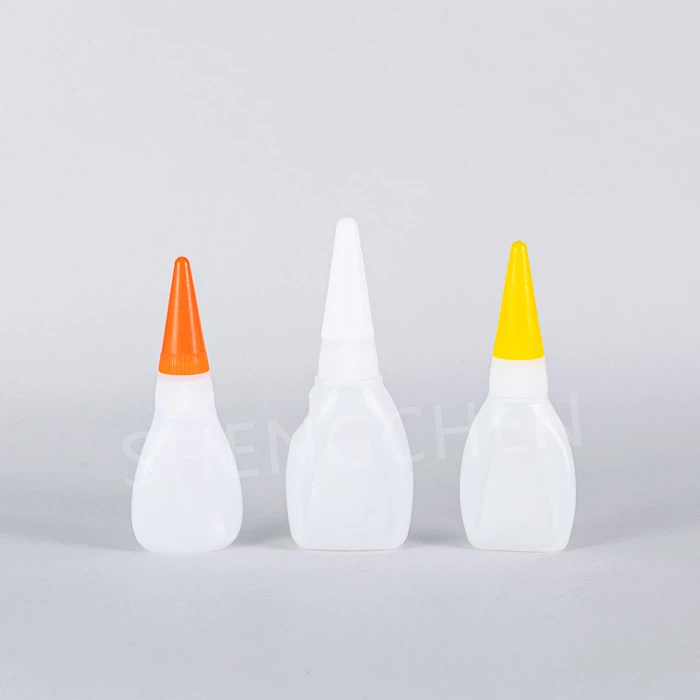
PE Plastic Dropper Bottles
Description
Technical Parameters
PE (Polyethylene) plastic dropper bottles are a type of packaging container that features a dropper mechanism for controlled dispensing of liquids, typically used for products like essential oils, medications, or other liquid formulations. PE plastic dropper bottles offer a combination of functionality, durability, and visual appeal, making them a popular choice for packaging a wide range of liquid products across various industries.
Why Choose Us?
Advanced Equipment
The companyhas more than 50 sets of advanced dedicated automatic blow molding machine and plastic machines, new product research and development is unique, and is equipped with mold production center, to sophisticated equipment, advanced technology and strict and scientific management.
Professional Technical Team
Our company has a professional mold design and production team, according to customer demand for all kinds of plastic products, from rapid prototyping to products or mould design services, for special requirements of the mould, will provide professional mould flow analysis.
Reliable Product Quality
We have been focused on product development, design, production, pay attention to every detail to create a perfect, the pursuit of superior quality, strive for excellence. The perfect blend of professional and focused makes our products competitive.
Excellent Customer Service
Company to "professional focus", "rapid response" and "excellent quality" for the idea. Practitioners years, has been committed to providing customers with the most suitable products, committed to creating the most satistactory services.

Long Tip Head Empty Glue Bottle
It is a kind of long tip head empty glue bottle with a thin and long nozzle design. It is basically used to load liquid glue such as shoe glue, wood glue, 502 glue or 401glue, so the bottle body is thin and soft, and can be easily squeezed to squeeze out glue.

Plastic Glue Bottle With Twist Opener
This is plastic glue bottle with twist opener, The glue bottle can clearly see the contents inside and readily applied with a little squeeze.Simply insert the nozzle and quickly squeeze the bottle to inject the desired amount of glue. The glue is precisely positioned and the speed is extremely fast.

This is Fast glue bottle, soft PE plastic dropper bottle is easy to extrusion liquid, You can easily squeeze the tip bottle to release the liquid, the thin tube tip allows for precision drop, good for those projects that require small drops or fine lines of glue.

This Cyanoacrylate Adhesive bottle product has a variety of choices, there are many styles, the capacity of 5ml, 10ml, 20ml, 30ml, 50ml, 100ml and so on. There is a steel needle inside the lid, sealing is very good, easy to use, long storage cycle.

This is alcohol hand sanitizer bottle made of polyethylene (PE), This bottle is used to contain hand sanitizer. It is made of PE material and is safe to use. And the bottles can be customized in color to suit different products. Bottles are usually sealed with screw cap to prevent liquid leakage and contamination.

This bottle is one of the 10ml round glue bottle we produce, We also have other capacity round bottles with of 5ml, 10ml, 16ml, 18ml, 20ml and 50ml ect. The plastic glue bottle produced by Shengchen has a high standard manufacturing technology. According to every shape, we will plan the corresponding model.

This bottle is one of the 500ml round plastic bottle we produce, Automated production equipment, professional R & D team, according to the sample customized new mold.

This 2ml super glue bottle product focuses on small capacity, small volume, soft translucent bottle body, with screw cap at the tail that can be unscrewed, and the head that can be used after pulling off the cap with scissors. It is convenient and fast. It is sold directly in the factory, with good quality and low price. The color and shape can be customized.

The Adhesive Liquid bottle has a printed surface or labeled surface, you can design and plan a frame in advance, the surface is smooth to facilitate the later packaging decoration. When encountering special requirements, it is also considered that in order to make the bottle sticker fixed without displacement, the shape of the bottle will be modified accordingly.
Advantages of PE Plastic Dropper Bottles
Precise Dispensing
There are times when you just need a few drops of medicine, which can be challenging to apply without a dropper attached to a bottle. With a PE plastic dropper bottle, you can precisely dispense the exact amount of medicine you need with ease. This is especially helpful for those who are dealing with liquids that require extreme accuracy in measurements such as essential oils, flavorings, and even food coloring.
No Leakage or Wastage
Another benefit of using PE plastic dropper bottles is that they offer leak-proof protection which helps to prevent unnecessary wastage when dispensing liquids. This ensures that there will be no messes or spills while also helping to maintain the purity and freshness of the product inside. Furthermore, this helps to reduce waste as you don't have to worry about any extra product going unused if it isn't in an appropriate container.
Safety
PE plastic dropper bottles also help improve safety. For instance, in the medical field, they prevent contamination that can occur when a user has direct contact with the liquid. Droppers on bottles keep liquids safely contained until they're dispensed. This is particularly important for medications and other sensitive liquids, as any contamination could be dangerous for patients. For one thing, they are leakproof, ensuring that any stored liquids will not spill or evaporate.
Protection
By preventing outside air and moisture from entering the bottle, tight caps keep liquids secure and safe for use for long periods. Eye drops and other medications, including certain essential oils, should not be exposed to sunlight. Many PE plastic dropper bottles are tinted darker to protect the contents and guarantee their continued perfection for this purpose.
Controlled Storage
Another benefit of using PE plastic dropper bottles is their ability to store liquids properly and securely. The cap helps ensure that no moisture or contaminants enter the bottle, keeping it fresh and uncontaminated for as long as possible. By utilizing a PE plastic dropper bottle, you can effectively extend the shelf life of your stored liquids and maintain their potency until they are required.
Application of PE Plastic Dropper Bottles
For Eardrops and Eyedrops
A majority of the medication administered directly to the eyes or ears usually come in liquid form. PE plastic dropper bottles offer the most convenient and effective way for patients to administer the medicine to themselves without pouring in too much into the ears or eyes.
For Essential Oils
A majority of essential oils are usually packaged in PE plastic dropper bottles. The PE plastic dropper bottles used for the essential oils allow for dispensation of larger drops compared to those used for eardrops and eyedrops. That makes dispensing the right amount of essential oil easy. The bottles are also usually dark to prevent direct sunlight from reaching the essential oil inside. That is because the quality of most essential oils is usually affected by exposure to sunlight.
For Glow Drops
Glow products are usually quite expensive, so most cosmetic brands have their glow products packaged in PE plastic dropper bottles. That allows the products to be utilized more efficiently.
For Hand Sanitizers
PE plastic dropper bottles are also used for hand sanitizers, especially for those packaged for travel use. The dropper bottles increase the sanitizer portability as they minimize the chances of spillage, while still offering easy usage. These 30 ML tincture dropper bottles guarantee precision when using powerful concentrates. PE plastic dropper bottles also help to reduce the chances of the hand sanitizer getting contaminated.
For Vape Juice
Vape juice, usually referred to as e-liquid or e-juice, is also traditionally packed in PE plastic dropper bottles. Each of the bottles is then labeled differently depending on the flavor and concentration of the vape juice. The main advantage of PE plastic dropper bottles is that they allow you to distribute the vape juice in precise dosages.
Components of PE Plastic Dropper Bottles
Bottle Body
The main material used for the PE plastic dropper bottle's body is PE (Polyethylene). PE is a flexible and durable plastic, making it highly suitable for manufacturing squeeze-type eye drop bottles.
Cap
The cap of the PE plastic dropper bottle is typically made from PE material, which possesses excellent sealing performance and chemical resistance. Some caps are designed with childproof features, enhancing the safety of the medication in a household setting and preventing accidental ingestion or misuse.
Dropper Nozzle
The dropper nozzle is a crucial component of the PE plastic dropper bottle, responsible for precise dispensing of the medication. Generally made from plastic materials, the nozzle is often composed of PE (Polyethylene) or plastic silicone, providing a soft and durable structure that ensures the smooth flow of the medication without causing secondary contamination.
Methods for Cleaning PE Plastic Dropper Bottles
Remove the dropper cap, if possible. Some PE plastic dropper bottles are easier to disassemble than others–don't force it. You can still clean the PE plastic dropper bottles even if you can't remove this. Set the rubber head aside. You will clean it separately.
Hold the PE plastic dropper bottles (sans dropper cap) under warm running water. Use a slender dropper brush to scrub inside the PE plastic dropper bottles. Add a tiny drop of mild dish detergent to the brush, if the grime on the dropper seems difficult to remove.
Rinse the PE plastic dropper bottles well by holding them under running water and allowing the water to flow through them.
Pour rubbing alcohol (or hydrogen peroxide–drug-store strength) into a shallow bowl, deep enough to submerge the dropper. This is to sanitize the dropper. Fill the dropper with the alcohol. Leave it in only for a minute ( rubbing alcohol can dry out plastic and rubber, however). Rinse the dropper well, inside and out, with warm water.
Place the PE plastic dropper bottles on a clean cloth to dry. Clean the dropper cap tip by holding it under warm water. Use the slender brush to clean the interior. Rinse it well with warm water and flush it with rubbing alcohol. Rinse it again to remove traces of the alcohol (which could dry the rubber head).
10 Safety Points For Using Chemical PE Plastic Dropper Bottles
PE plastic dropper bottles must be clearly identified for contents. At a minimum, they must have the chemical name indicated. It is also recommended that they have a hazard warning indicated such as "flammable" or a hazard symbol.
When using generic PE plastic dropper bottles, the chemical identity must be clearly indicated in permanent ink or label. Do not use abbreviations or chemical formulas.
PE plastic dropper bottles that are leaking, damaged, or not clearly identified should not be used. Report the problem to the lab area safety lead or your supervisor.
PE plastic dropper bottles made of Polyethylene (PE) are intended for short-term dispensing (not long-term storage) and will degrade over time depending on the solvent used. Use only solvents compatible with PE.
Do not overfill PE plastic dropper bottles. Leave an inch or more of headspace from the cap to prevent spillage or drips.
Use of "safety vented" PE plastic dropper bottles are recommended. These have a venting assembly that prevents pressure build-up causing drips from the spout.
Do not store PE plastic dropper bottles containing flammable liquids near sources of heat or ignition such as hot plates. At no time should a plastic PE plastic dropper bottle be placed on top of a hot plate (even if it is not "on").
Store PE plastic dropper bottles containing flammable liquids in a secondary containment tray to catch any drips that may occur. Large accumulations of PE plastic dropper bottles should be placed in a flammable storage cabinet when not in use and not stored in a fume hood.
Always check the PE plastic dropper bottle label prior to adding solvent to avoid accidentally mixing with another chemical.
Do not use PE plastic dropper bottles for dispensing highly hazardous chemicals such as hydrofluoric acid, nitric acid, or hydrogen peroxide. If accidentally mixed with an incompatible solvent, a dangerous reaction could occur.
6 Manufacturing Processes Methods Of PE plastic dropper bottles
Compression molding
Compression molding is also called compression molding in the industry. It is an important method for the processing of PE plastic dropper bottles for the molding of phenolic resin, urea-formaldehyde resin, unsaturated polyester resin, and other thermosetting plastics.
Calendering
Calendering is to process the resin and various additives through the gap between two or more calender rolls of the calender after the expected treatment into a film or sheet, and then peel it from the calender roll, and then cool and shape it. A molding method. Calendering is the main molding method of polyvinyl chloride resin, and the main method for manufacturing films, sheets, plates, artificial leather, floor tiles, and other products.
Injection molding
Injection molding can also be called injection molding. Injection molding is a method of using an injection molding machine to inject thermoplastic melt into a mold under high pressure, and then cool and solidify to obtain a product. The advantages of injection molding are fast production speed, high efficiency, automatic operation, and the ability to form parts with complex shapes, which is especially suitable for mass production. The disadvantage is that the cost of equipment and molds is high, and the injection molding machine is not easy to clean.
Blow molding
Blow molding is also called hollow blow molding. It is mainly a method of inflating the hot resin parison closed in the mold into hollow products by the pressure of compressed air. Blow molding includes two methods: blown film and blown hollow products. The blow molding method is mainly used to produce film products, various bottles, barrels, pots, etc.
Extrusion molding
Extrusion, also known as extrusion molding, is a method in which heated resin is continuously passed through a mold with an extruder to extrude products of the desired shape. Its advantages are that products of various shapes can be extruded, the production efficiency is high, and the production can be automated and continuous. The disadvantage is that thermosetting plastics cannot be processed by this method widely, and the product size is prone to deviation.
Foam molding
Foam molding is the process of adding appropriate foaming agents to the foaming material to produce a microporous structure in the plastic. According to the cell structure, it is divided into open-cell foam and closed-cell foam, which is determined by the manufacturing method.
How to Sterilize PE Plastic Dropper Bottles?
Ethylene Oxide (ETO) Sterilization
Ethylene Oxide is a commonly used sterilization method, suitable for efficient sterilization of PE plastic dropper bottles. During the ETO sterilization process, the plastic bottles are placed inside a sealed sterilization chamber and exposed to ethylene oxide gas for a specific duration. Ethylene oxide gas can penetrate the surface and interior of the plastic bottles, killing microorganisms and achieving effective sterilization.
Gamma Irradiation Sterilization
Gamma irradiation is a high-energy radiation that can also be used for sterilizing PE plastic dropper bottles. During the gamma irradiation sterilization process, the plastic bottles are exposed to radiation from a radiation source, effectively killing microorganisms inside the bottles. Gamma irradiation has high penetration ability, allowing it to eliminate various microorganisms inside the bottles, ensuring the purity and safety of the eye medication.
How To Apply Grout With PE Plastic Dropper Bottles?
In most grout applications, you spread the grout over the entire tiled surface with a grout float, pressing it into the lines. However, this messy process becomes a problem when you have heavily embossed tiles, where the intricate patterns can catch tile and make cleanup difficult. It's also a difficult process when you need some precision grouting in tight areas. A PE plastic dropper bottle will help you put the grout only where it needs to go, filling the grout lines without covering the tile.
1. Mix the grout with water in a small bucket, following the product's operating instruction. Allow it to sit a few minutes to thicken.
2. Open the top of the PE plastic dropper bottle, and put a wide-mouth funnel into the bottle.
3. Pour grout into the funnel, allowing it fall into the PE plastic dropper bottle until the bottle is full, then replace the top.
4. Cut the tip off the top with a utility knife if necessary. Cut it at a 45-degree angle to allow for more precise application.
5. Hold the tip of the PE plastic dropper bottle at the beginning of the first grout line. Squeeze out some grout, and move the bottle slowly to the other end of the line.
6. Press the grout into the line with your finger. Some grout might get on the tile, but it should only be a small amount. Wipe your finger on a rag.
7. Repeat the process with the remaining grout lines.
8. Wipe the grout off the tile with a small damp sponge, being careful not to press into the line and remove additional grout.
9. After the grout drys overnight, pour the grout sealer in a plastic sealer application bottle. The bottle has a foam or brush tip to help you apply the sealer only to the grouted areas. Turn the bottle upside down and squeeze slightly as you slide the tip over the grout lines.
Our Factory
Our factory was established in 2002. We are dedicated to provide you with the most suitable products to satisfy all the honourable customer, and the quality of our products with unique competitive. Our products meet international standards, is popular in China, and also exported to Europe, America, west Africa, southeast Asia, etc. For a long period, our company takes pursuing for the best quality as the aim and makes great efforts to do the best

Our Certifications
These certificates to our technical ability and quality. The company has 20+ years of adhesive packaging production experience.


Ultimate FAQ Guide to PE Plastic Dropper Bottles
Q: How do you sterilize plastic dropper bottles?
Boil to Disinfect. Place the pieces in boiling water for at least five minutes.
Rinse Once More.
Air Dry the Dropper Bottles.
Store Appropriately.
Conclusion.
Q: What does a plastic dropper do in a laboratory?
Q: What are plastic droppers made of?
Q: How do dropper bottles work?
Q: What to put in a dropper bottle?
Q: How do you remove bacteria from plastic bottles?
Q: What materials of dropper bottles are there?
Q: What are dropper bottles used for?
Q: What are the transportation benefits of dropper bottles?
Q: What are the different dropper bottle closures?
Q: What are the different colour options of dropper bottles?
Q: What does a dropper bottle do in chemistry?
Q: Can you reuse plastic droppers?
Q: What is a dropper bottle called?
Q: What is the difference between a pipette and a dropper?
Q: What leaches out of plastic bottles?
Q: What is the science behind dropper?
Hot Tags: pe plastic dropper bottles, China pe plastic dropper bottles manufacturers, suppliers, factory
Previous
Alcohol Hand Sanitizer BottleSend Inquiry


