



HDPE Pesticide Bottle
Description
Technical Parameters
HDPE pesticide bottle is mainly used to contain chemical reagents such as pesticides, so the raw material used is HDPE. This material has good heat resistance and cold resistance, good chemical stability, high rigidity and toughness, good mechanical strength, and is insoluble in any organic solvent at room temperature, and is resistant to corrosion of acids, alkalis and various salts.
Why Choose Us?
Advanced Equipment
The companyhas more than 50 sets of advanced dedicated automatic blow molding machine and plastic machines, new product research and development is unique, and is equipped with mold production center, to sophisticated equipment, advanced technology and strict and scientific management.
Professional Technical Team
Our company has a professional mold design and production team, according to customer demand for all kinds of plastic products, from rapid prototyping to products or mould design services, for special requirements of the mould, will provide professional mould flow analysis.
Reliable Product Quality
We have been focused on product development, design, production, pay attention to every detail to create a perfect, the pursuit of superior quality, strive for excellence. The perfect blend of professional and focused makes our products competitive.
Excellent Customer Service
Company to "professional focus", "rapid response" and "excellent quality" for the idea. Practitioners years, has been committed to providing customers with the most suitable products, committed to creating the most satistactory services.

Long Tip Head Empty Glue Bottle
It is a kind of long tip head empty glue bottle with a thin and long nozzle design. It is basically used to load liquid glue such as shoe glue, wood glue, 502 glue or 401glue, so the bottle body is thin and soft, and can be easily squeezed to squeeze out glue.

Plastic Glue Bottle With Twist Opener
This is plastic glue bottle with twist opener, The glue bottle can clearly see the contents inside and readily applied with a little squeeze.Simply insert the nozzle and quickly squeeze the bottle to inject the desired amount of glue. The glue is precisely positioned and the speed is extremely fast.
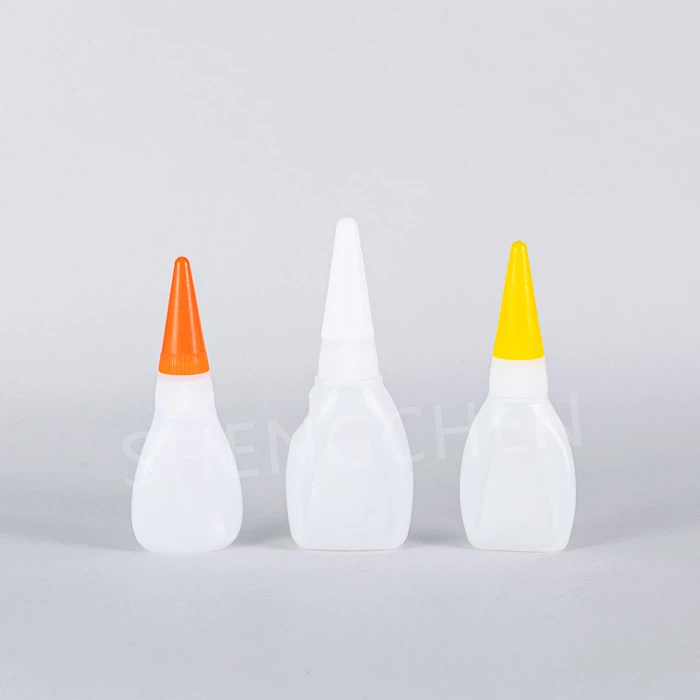
The edges and corners of the bottle are small in thickness and generally round in shape. The shape, size, structure of plastic bottles are suitable for the requirements of various types of filling machines, to meet the requirements of high-speed automatic filling machines.

This Cyanoacrylate Adhesive bottle product has a variety of choices, there are many styles, the capacity of 5ml, 10ml, 20ml, 30ml, 50ml, 100ml and so on. There is a steel needle inside the lid, sealing is very good, easy to use, long storage cycle.

This is alcohol hand sanitizer bottle made of polyethylene (PE), This bottle is used to contain hand sanitizer. It is made of PE material and is safe to use. And the bottles can be customized in color to suit different products. Bottles are usually sealed with screw cap to prevent liquid leakage and contamination.

This bottle is one of the 10ml round glue bottle we produce, We also have other capacity round bottles with of 5ml, 10ml, 16ml, 18ml, 20ml and 50ml ect. The plastic glue bottle produced by Shengchen has a high standard manufacturing technology. According to every shape, we will plan the corresponding model.

This bottle is one of the 500ml round plastic bottle we produce, Automated production equipment, professional R & D team, according to the sample customized new mold.

This 2ml super glue bottle product focuses on small capacity, small volume, soft translucent bottle body, with screw cap at the tail that can be unscrewed, and the head that can be used after pulling off the cap with scissors. It is convenient and fast. It is sold directly in the factory, with good quality and low price. The color and shape can be customized.

The Adhesive Liquid bottle has a printed surface or labeled surface, you can design and plan a frame in advance, the surface is smooth to facilitate the later packaging decoration. When encountering special requirements, it is also considered that in order to make the bottle sticker fixed without displacement, the shape of the bottle will be modified accordingly.
Advantages of HDPE Pesticide Bottle
Better resistance to chemicals
The chemical business has a long-standing preference for HDPE pesticide bottles because this thermoplastic polymer is very resistant to chemicals. We've already said that HDPE is strong against a wide range of chemicals, from acids and bases to alcohols and different solvents. This natural quality works as a shield, protecting both the user and the chemicals that are being stored. The integrity of the container stays the same, creating a safe space that is very important when dealing chemicals. Think of the chemical business as a battlefield full of different substances. HDPE pesticide bottles, which are very resistant to chemicals, stand guard over this battlefield, protecting the chemicals inside them from breaking down. This toughness not only makes sure that the containers last a long time, but it's also a key part of keeping the chemical storage area safe and stable.
Durability and resistance to impact
HDPE is a popular choice in the chemical business because it is strong and doesn't bend. Because they don't break easily when they hit something or fall, HDPE pesticide bottles are strong protectors that keep accidents from happening and keep the containers' structural integrity. When working with chemicals, where mistakes are always a possibility, the long-lasting nature of HDPE pesticide bottles is very important for trustworthiness. If containers have to go through the rough conditions of being handled, moved, and stored, HDPE pesticide bottles will protect the chemicals inside by standing strong against impacts. This durability not only keeps the goods safe, but it also lowers the risk of accidents that could happen if the containers are broken.
Proof against leaks
When HDPE pesticide bottles are put together with the right seals, they show impressively leak-proof performance. This trait is very important, especially in the chemical business where working with dangerous materials needs extra safety. When properly sealed, HDPE pesticide bottles make a barrier that can't be broken through, which lowers the chance of spills and contamination. Now imagine a terrible situation where a chemical spill could happen. HDPE pesticide bottles, because they don't leak, would protect the area around the chemicals, making sure that they stay contained and no harm comes to it. This performance of not leaking not only improves the safety of activities but also lessens the damage that accidental chemical releases do to the environment.
Not heavy and not expensive
In their quest for excellence, HDPE pesticide bottles take practical concerns into account by being much lighter than their glass peers. The chemical business can really benefit from this material's lightness. Transportation costs go down, handling gets easier, and the speed of operations goes up. Making HDPE pesticide bottles is also often a more cost-effective option than making glass cases. Think about how hard it is to move big glass containers around. Now think about how easy it is to move lightweight HDPE pesticide bottles and how much less it costs to do so. Efficiency and low cost are very important in today's world, so HDPE is a practical choice that fits with the chemistry industry's economic needs.
Potential for sustainability
Even though it's not always the case, HDPE pesticide bottles have the potential to be environmentally friendly by being recycled. This is a big benefit over alternatives that can't be recycled. That being said, HDPE could be environmentally friendly if there were good recycle facilities and people who used it would properly get rid of it. Think about how options that can't be recycled affect the environment. Now, picture a cycle where HDPE pesticide bottles are recycled properly, helping the chemical industry take a more environmentally friendly stance. While responsible behavior is needed for sustainability to happen, the fact that HDPE pesticide bottles can be recycled adds to their already long list of benefits for the earth.
Application of HDPE Pesticide Bottle
Fertilizer and Pesticide Powerhouses
Fertilizers and pesticides are the secret weapons in any farmer's arsenal, providing vital nutrients for your crops and keeping pesky pests at bay. However, storing these potent chemicals requires a special kind of container. Here's where HDPE pesticide bottles shine. Their chemical resistance makes them the perfect home for fertilizers and pesticides. The material won't react with the chemicals, ensuring their potency remains intact. This is especially important for things like organic fertilizers, where the delicate balance of natural ingredients needs to be preserved.
Preserving the Future of Your Harvest
Seeds are the tiny powerhouses that hold the promise of a bountiful harvest. But improper storage can quickly turn that promise into dust. Here's where HDPE pesticide bottles come to the rescue again. Their ability to create a controlled environment is a game-changer for seed storage. The airtight seal prevents moisture from getting in, which is a major culprit behind seed spoilage. This helps maintain optimal humidity levels, crucial for keeping seeds viable and ready to sprout when planting season arrives.
Streamlining Transportation on the Farm
Life on a farm often involves transporting a variety of liquids. From the lifeblood of your crops – water – to herbicides and other solutions, having reliable containers is essential. HDPE pesticide bottles step up to the plate once again, offering a convenient and safe way to move liquids around your farm. Their lightweight design makes them easy to carry and maneuver, even when filled. This can save you precious time and energy, especially when dealing with large volumes of liquids. The leakproof seal ensures your precious liquids stay put, preventing spills and messes during transportation. No more dreading the task of moving water across the farm or having to clean up accidental spills of herbicides. With HDPE pesticide bottles, your liquid transportation becomes a smooth and efficient process.
From Feed to Grains, Keeping It Fresh
Whether it's nourishing your livestock with quality feed or storing your harvested grains, keeping your agricultural products fresh and protected is crucial. HDPE pesticide bottles offer a fantastic solution for packaging a variety of agricultural products. Their durable construction safeguards your items from physical damage, preventing crushing or breakage during storage or transportation. The airtight and leakproof seal once again plays a vital role. It keeps moisture and pests at bay, ensuring your feed or grains remain fresh and free from spoilage. This is especially important for things like organic feed, where preserving the natural nutrients is essential for animal health. With HDPE pesticide bottles, your agricultural products are packaged securely, maintaining their quality and freshness until they're needed.
Why HDPE Pesticide Bottles Are Effective for Agriculture?

Material properties
The inherent properties of hdpe, including its durability, chemical resistance, and uv protection, make it an ideal material for packaging agrochemicals. These properties ensure that the bottles can withstand the challenges associated with the agricultural environment.
Customization and design
Hdpe allows for the customization of bottle design to suit the specific needs of different agrochemicals. This adaptability ensures that packaging is tailored to the characteristics of the product, optimizing functionality and user convenience.
Lifecycle considerations
The recyclability of hdpe aligns with the growing emphasis on the entire lifecycle of products. HDPE pesticide bottles can be recycled and repurposed, contributing to a circular economy and minimizing the environmental impact of agricultural packaging.
Regulatory compliance
Hdpe is a material that complies with regulatory standards for packaging in the agricultural sector. Meeting these standards is essential for ensuring the safety and efficacy of agrochemicals, and hdpe's suitability makes it a preferred choice for manufacturers.
HDPE Pesticide Bottle vs. Regular Plastics
HDPE, which stands for High-Density Polyethylene, is a specific type of plastic known for its strength and durability. Regular plastic bottles, on the other hand, can be made from a variety of materials, with the most common being PET (Polyethylene Terephthalate) and LDPE (Low-Density Polyethylene).
One of the biggest advantages of HDPE pesticide bottles is their impressive strength. Made from denser plastic, HDPE pesticide bottles can withstand a lot of wear and tear. They're less likely to crack, dent, or break under pressure, making them ideal for agricultural applications where containers might get bumped or dropped. Regular plastic bottles, especially those made from LDPE, tend to be more fragile and susceptible to damage. This can be a problem on a farm where things can get jostled around during daily operations.
Many agricultural products, like fertilizers and pesticides, are potent chemicals. Storing these substances safely requires containers that won't react with them. Here again, HDPE shines. Its chemical resistance ensures these harsh chemicals won't break down the bottle or leach into the contents. This is crucial for maintaining the effectiveness of your products and preventing any potential contamination.
Regular plastic bottles, particularly PET, can be susceptible to degradation from certain chemicals. This can compromise the integrity of the container and potentially affect the quality of the stored product.
While regular plastic bottles might seem like a cost-effective option initially, their downsides can outweigh the initial savings. As mentioned earlier, their fragility makes them prone to damage, leading to potential spills and wasted product. Additionally, some regular plastics can leach chemicals into the contents over time, especially if exposed to heat or sunlight. This can be detrimental to the quality of your agricultural supplies and even pose a health risk.
When it comes to choosing the right container for your farm, HDPE pesticide bottles are the clear winner. Their superior durability, chemical resistance, and overall sturdiness make them the ideal choice for storing and transporting a wide range of agricultural products. By investing in HDPE pesticide bottles, you're not only protecting your valuable supplies but also ensuring their quality and effectiveness for a longer period.
Manufacturing Process of HDPE Pesticide Bottles
Raw Material Preparation
The journey begins with the collection of raw HDPE resin pellets. These pellets are typically produced through the polymerization of ethylene, a hydrocarbon gas derived from crude oil or natural gas. The quality and properties of the resin depend on the specific manufacturing process and additives used.
Extrusion
The raw HDPE resin pellets are then melted and extruded into a continuous parison – a tube-like structure with an opening at one end. This process is known as extrusion and is facilitated by heating the resin to its melting point.
Extrusion Blow Moulding
The extruded parison is transferred to a mould, and a controlled amount of air is injected into the parison, forcing it to take the shape of the mould. This process, known as extrusion blow moulding, results in the creation of the bottle's basic form. The mould dictates the final shape and size of the bottle.
Cooling and Trimming
Once the bottle shape is formed, it undergoes a cooling process to solidify the plastic. After cooling, excess material is trimmed, leaving behind a seamless and uniform HDPE pesticide bottle.
Quality Control
Quality control measures are implemented throughout the manufacturing process to ensure that the produced bottles meet industry standards. This includes checks for thickness, dimensions, and overall structural integrity.
Packaging
After undergoing rigorous quality checks, the finished HDPE pesticide bottles move on to the packaging stage. To maintain product integrity, bottles are carefully sorted, grouped, sealed, and labelled for identification. By ensuring that the containers are distribution-ready, this procedure helps to preserve their quality throughout storage and transportation. It is the last stage of production, preparing the carefully constructed HDPE pesticide bottles to be delivered to customers, where they will be safely used to carry and hold various chemicals used in many different sectors.
HDPE Bottle Vs. PET bottles: Making the Right Packaging Choice
What are HDPE and PET bottles?
HDPE and PET bottles are both widely used for packaging various products, from beverages to cleaning agents. HDPE is a plastic material known for its sturdiness and durability. On the other hand, pet is another type of plastic known for its clarity, lightweight nature, and recyclability.
Strength and durability: Which one holds up better?
When it comes to strength and durability, HDPE pesticide bottles take the lead. They are tougher and more resistant to impact compared to PET bottles. This makes HDPE pesticide bottles a preferred choice for products that might undergo rough handling or transportation.
Clarity and transparency: Which material offers better visibility?
If you're looking for bottles that showcase the contents clearly, PET bottles have the upper hand. They are known for their excellent clarity, allowing consumers to see the product inside. This makes PET bottles a popular choice for beverages like juices and bottled water.
Weight and portability: Which material is lighter?
PET bottles are significantly lighter than HDPE pesticide bottles. This characteristic is particularly advantageous for products that need to be carried around easily, such as single-serve beverages. The lightweight nature of PET bottles also helps in reducing transportation costs.
Environmental impact: Which material is more sustainable?
When it comes to sustainability, both materials have their merits. HDPE is recyclable and can be used to create new bottles or other plastic products. Pet, on the other hand, is highly recyclable and is widely accepted by recycling facilities. It's commonly used to make items like clothing, carpets, and more bottles.
Barrier properties: Which material provides better protection?
If your product requires protection from external factors like light, air, and moisture, PET bottles are a better choice. They offer superior barrier properties, which is crucial for products that can degrade or spoil due to exposure.
Chemical compatibility: Which material is more resistant?
HDPE pesticide bottles are known for their chemical resistance. They can withstand a wide range of chemicals, which makes them suitable for packaging products like cleaning agents, detergents, and chemicals. PET bottles are also chemically resistant, but they might not be as suitable for aggressive chemicals as HDPE.
Recyclability: Which material is easier to recycle?
Both HDPE and PET bottles are recyclable, but PET bottles are often more readily accepted by recycling facilities due to their high demand in the recycling market. PET bottles can be recycled into a variety of products, making them an environmentally friendly option.
Cost considerations: Which material is more economical?
HDPE is generally less expensive than pet, which can make a significant difference in large-scale production. If budget constraints are a concern, HDPE might be the more economical choice for your packaging needs.
End-of-life options: Which material offers better disposal alternatives?
Both materials have viable end-of-life options. HDPE pesticide bottles can be recycled into new HDPE products or used for energy recovery. PET bottles can be recycled into various items or repurposed for other applications. It's worth considering the disposal alternatives that align with your sustainability goals.
How HDPE Pesticide Bottles Have Helped Agriculture?
Improved product safety
The robustness and chemical resistance of HDPE pesticide bottles provide a secure environment for agrochemicals. This ensures that farmers and other users can handle and apply these products without the risk of exposure to harmful substances, enhancing overall safety in agricultural practices.
Enhanced supply chain efficiency
The lightweight nature of HDPE pesticide bottles reduces transportation costs, making the supply chain more efficient. This is particularly beneficial for farmers in remote areas who may face logistical challenges. The durability of hdpe also contributes to a reduction in product losses during transit.
Extended shelf life of agrochemicals
The chemical resistance and uv protection offered by HDPE pesticide bottles contribute to the extended shelf life of agrochemicals. This is crucial for farmers who may need to store these products for an extended period before use, ensuring that the chemicals retain their effectiveness over time.
Environmental sustainability
The recyclability of hdpe aligns with the growing emphasis on environmental sustainability in agriculture. By choosing recyclable materials, the industry can reduce its carbon footprint and promote responsible waste management practices.
Adaptability to varied climates
Agriculture is practiced in diverse climates, and hdpe's resistance to environmental stressors makes it suitable for use in various conditions. Whether in hot and humid climates or cold and dry regions, hdpe agrochemical bottles maintain their structural integrity and protect the contents effectively.
Our Factory
Our factory was established in 2002. We are dedicated to provide you with the most suitable products to satisfy all the honourable customer, and the quality of our products with unique competitive. Our products meet international standards, is popular in China, and also exported to Europe, America, west Africa, southeast Asia, etc. For a long period, our company takes pursuing for the best quality as the aim and makes great efforts to do the best

Our Certifications
These certificates to our technical ability and quality. The company has 20+ years of adhesive packaging production experience.


Ultimate FAQ Guide to HDPE Pesticide Bottle
Q: What are the features of HDPE bottles?
Q: Are HDPE plastic bottles safe?
Q: What are the 4 properties of HDPE?
Q: How long do HDPE bottles last?
Q: How do I identify my HDPE bottle?
Q: Can you drink from HDPE bottles?
Q: How do you sterilize HDPE bottles?
Q: Can you heat HDPE bottles?
Q: How do you seal a HDPE bottle?
Q: Can HDPE bottles be hot filled?
Q: Are HDPE bottles food safe?
Q: Why is HDPE used for household bottles?
Q: What is the temperature limit for HDPE bottles?
Q: How do you clean HDPE bottles?
Q: Does bleach damage HDPE?
Hot Tags: hdpe pesticide bottle, China hdpe pesticide bottle manufacturers, suppliers, factory
Previous
PE Plastic Dropper BottlesNext
8ml Glue BottleSend Inquiry


